Lockout Procedure / Conveyors and packaging
Industrial robot cell lockout procedure
A industrial robot cell holds electrical, pneumatic and gravity energy. Here is where it hurts people, and the procedure for yours: the placard for the machine and the written procedure for the binder.
E1P1G13 energy sources on a typical industrial robot cell
Where a industrial robot cell hurts people
- The cell gate interlock and the teach pendant E-stop do not isolate energy.
- A vacuum or air gripper can drop its part when air is cut. Put the part down first.
- Arm axes can fall when their brakes are released for service.
Other packaging machines
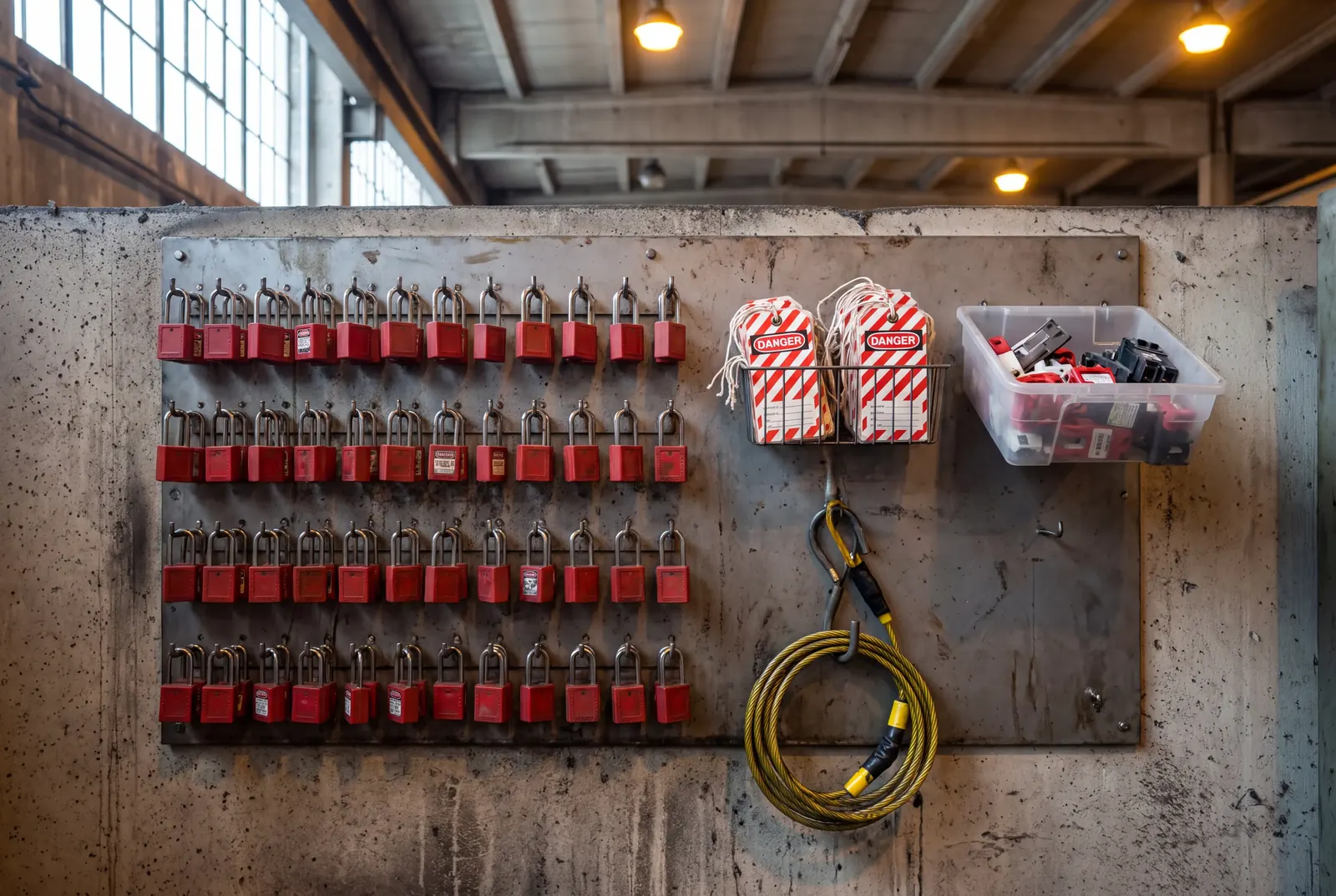
For the industrial robot cell's lockout station
The devices the placards call for. One lock per person, a tag on every lock.
- SAFBY safety padlocks, keyed differently, 10 packOne lock per person, numbered, each opened only by its own key.Check the current price
- TRADESAFE "Danger: Do not operate" tags, 30 packVinyl tags with ties, a line for the name, one on every lock.Check the current price
- TRADESAFE adjustable ball valve lockout, 2 packCloses over a ball valve handle from 1/2 to 4-1/4 in pipe, for air, water and gas lines.Check the current price
- Master Lock 421 group lockout haspSix locks on one isolation point, for a crew working on the same machine.Check the current price
- Master Lock 1457E410KA lockout tagout kitA personal kit for one authorized employee: padlocks, hasps, tags and electrical lockouts in a pouch.Check the current price
As an Amazon Associate we earn from qualifying purchases.